Forest Cabin Retreats
Finnegan Flynn
| 16-04-2026
 · Travel Team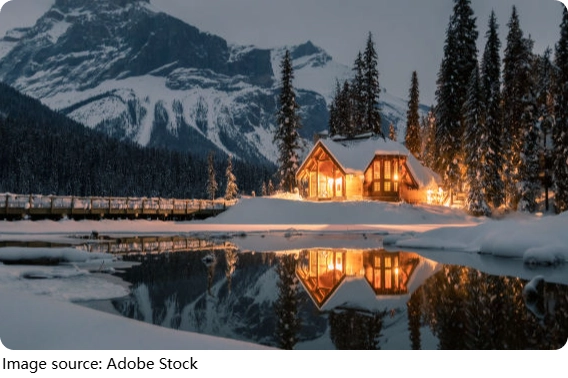
From directly above, a single small structure with a pale roof sits completely encircled by dark green canopy, at the precise edge where the forest meets still dark water.
No road visible. No neighbors. Just the cabin, the trees, and the lake pressing in from three sides.
Most people who imagine this scene feel the same thing immediately — they want to be inside that cabin, with the forest outside every window and the water within walking distance of the door. That feeling has a name in the travel industry — it is called a cabin retreat — and British Columbia in western Canada offers more variations of it than almost anywhere else on the planet.
Have you stayed in a genuine forest cabin, or has it been sitting on your list as something you will do eventually? Either way, here is the guide that moves it from eventually to planned.
British Columbia
What Makes British Columbia the Right Destination
British Columbia occupies the southwestern corner of Canada, bounded by the Pacific Ocean to the west and the Rocky Mountains to the east, with an interior plateau of lakes, rivers, and boreal forest covering the vast territory between those two extremes.
The province contains more than 20,000 lakes — a density that makes the sight of a forest-surrounded cabin beside dark water not an exceptional rarity but a fairly ordinary feature of the landscape from any elevated vantage point.
The combination of forest type, water quality, and relative remoteness that produces the most atmospheric cabin experiences is most reliably found in the province's central and northern interior regions — the Cariboo, the Shuswap, the Okanagan highlands, and the areas surrounding Prince George.
These regions have lower visitor density than the coastal areas around Vancouver and Whistler, more genuine wilderness character, and a cabin culture that has been developing for generations among both local families and visiting travelers.
The interior lakes of BC are typically dark and still in low light conditions — tannin-stained from the surrounding forest, deep, cold, and clear rather than murky. Swimming in these lakes during summer months is one of the defining sensory experiences of a BC cabin stay.
Getting There
Vancouver International Airport is the primary entry point for international visitors to British Columbia, receiving direct flights from cities across North America, Europe, Asia, and Australia. From Vancouver, the cabin regions of the interior are accessible by road or by regional flight.
The drive from Vancouver to the central interior lake regions takes approximately four to six hours via the Trans-Canada Highway or the Coquihalla Highway, depending on destination. Car rental from Vancouver airport starts from approximately $60 to $90 per day for a standard vehicle. A four-wheel drive or all-wheel drive vehicle is recommended for accessing cabin properties on unpaved access roads, with rates starting from approximately $90 to $130 per day.
For visitors wanting to reach more remote regions quickly, Pacific Coastal Airlines and Central Mountain Air operate regional services from Vancouver to interior airports including Williams Lake, Prince George, and Quesnel, with tickets starting from approximately $120 to $200 each way. From these regional airports, car rental is available for the final drive to specific lake and cabin areas.
Finding and Booking the Right Cabin
A genuine forest cabin experience — real enclosure by trees, water access, genuine remoteness — requires more specific searching than booking a standard accommodation property. Several platforms and approaches yield the best results.
1. BC Vacation Rentals and VRBO both list privately owned cabin properties throughout the province, including many that are accessible only by boat or unpaved track. Search filters for waterfront access and minimum distance from nearest town reliably surface the more genuinely remote options. Nightly rates for quality lakeside cabin properties start from approximately $150 to $250 per night depending on size and season.
2. BC Parks cabin rentals — the provincial parks system operates a small number of wilderness cabins within protected areas, bookable through the provincial reservation system. These properties are genuinely remote, maintained to a basic standard, and priced from approximately $50 to $80 per night. They book out months in advance during summer season.
3. Resort lake properties — several established lake resorts in the interior offer individual cabin accommodation with shared facilities, combining the cabin aesthetic with more reliable amenities. Rates at properties like Lac Le Jeune Resort or Painted Bluffs start from approximately $180 to $280 per night during peak summer season.
What to Do Once You Arrive
The honest answer is considerably less than you might plan — and that is precisely the point.
1. Kayaking or canoeing on the lake — most cabin properties either provide watercraft or have rental available locally for approximately $20 to $40 per day.
2. Hiking trails — BC interior lake regions are threaded with established and informal trails through old-growth forest, ranging from one-hour loops to multi-day routes.
3. Fishing — BC interior lakes support healthy populations of rainbow trout and other freshwater species. A non-resident fishing license costs approximately $25 to $40 for a three-day permit.
4. Simply sitting — on the dock, in the morning, watching the mist come off the water. This costs nothing and is reliably the activity that cabin guests remember most clearly when they return to ordinary life.
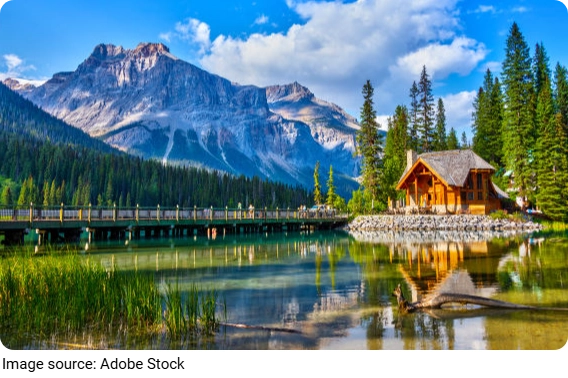
The appeal of a forest cabin retreat is not complicated. It is the appeal of genuine removal — a place where the trees have pressed in close enough that the rest of the world feels genuinely far away, and where the water outside the door asks nothing of you beyond your presence on its shore. British Columbia has thousands of versions of that place.
Have you found yours yet, or is the cabin in the forest still waiting for the trip you keep meaning to plan? Either way, the lakes will be there — dark, cold, and entirely worth the drive.