Active Particle, Deep Repair

Caroll Alvarado
| 21-04-2026
 · Science Team
Active particles are tiny engineered units that can move, interact, and respond to their local environment in controlled ways. In advanced materials, these particles are not just passive fillers; they are designed to trigger specific chemical or physical responses when damage occurs.
Modern research has shown that even small concentrations of such particles can dramatically alter how a material behaves under stress, enabling processes like internal reorganization, signal‑driven mobilization, and localized repair that resemble the responsiveness seen in living systems.
From Particles to Self‑Repair Mechanisms
Deep repair in engineered systems relies on embedding active particles that act as internal repair agents. When a micro‑fracture forms, these particles migrate toward the damaged region, often guided by chemical gradients, mechanical stress fields, or temperature changes.
Once concentrated at the defect, they can initiate a cascade of events such as polymerization, cross‑linking, or localized phase transitions that effectively refill gaps and restore load‑bearing capacity. Recent work in polymer‑based composites has demonstrated materials that can recover significant mechanical strength after multiple cycles of damage and healing, thanks to embedded microcapsules and reactive nanoparticles that release healing agents precisely where they are needed.
Role of Active Particles in Polymers and Coatings
In polymers and protective coatings, active particles enhance durability and extend service life. For example, nano-sized capsules filled with low-viscosity healing agents can be dispersed throughout a polymer matrix so that any propagating defect ruptures nearby capsules, allowing the liquid to flow into the fracture and solidify.
Active particles can also act as catalysts, speeding up cross-linking reactions at the defect site or modifying the local viscosity to ensure thorough filling of fine defects. This approach is now being applied in aerospace, automotive, and energy infrastructure, where components must withstand repeated mechanical and thermal stresses without frequent manual maintenance.
Deep Repair in Structural Composites
In structural composites such as those used in wind‑turbine blades, aircraft fuselages, and transport vessels, deep repair is crucial for safety and longevity. Researchers at North Carolina State University have developed thermoelectric self‑healing systems that use embedded particles to generate localized heat in response to electrical signals, enabling resin‑based matrices to reflow and re‑bond around internal.
Experiments show these systems can successfully mend fractures in composite laminates over more than a thousand healing cycles, effectively creating materials that can last decades or even centuries under controlled conditions. Such advances are reshaping how engineers think about design lifetime, shifting from periodic replacement to continuous, invisible internal repair.
Bio‑Inspired Strategies for Deep Regeneration
Much of the progress in deep‑repair systems draws inspiration from nature, where living tissues routinely manage small‑scale damage without external intervention. Self‑healing hydrogels, for instance, mimic the extracellular matrix by using dynamic bonds that break and reform in response to stress, allowing the network to flow around defects and re‑connect.
In these systems, active particles can serve as both reinforcing units and signal‑responsive actuators, changing their interactions with surrounding chains when triggered by light, electric fields, or specific chemical cues.
Dr. Nancy Sottos, a pioneer in self-healing materials research, has highlighted the need for scalable systems in which embedded functionalities enable autonomous damage detection and localized delivery of healing agents, facilitating efficient and repeatable repair processes.
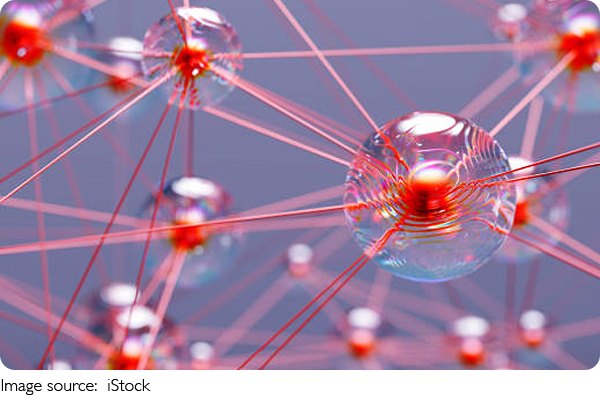
By embedding responsive units that can sense defects and initiate localized healing, researchers are creating systems that maintain their integrity over thousands of cycles, reducing the need for costly inspections and replacements. As these concepts mature, they promise a future in which bridges, vehicles, buildings, and everyday products can not only endure but quietly repair themselves, relying on the quiet, microscopic work of active particles embedded deep within their structure.