Europe’s EV Race Accelerates

Mukesh Kumar
| 26-08-2026
 · Vehicle Team
Europe’s electric vehicle market began 2026 on a strong note, even as the wider passenger car market weakened. Around 298,000 plug-in vehicles were registered in January, representing a 22% increase compared with the same month in 2025.
Battery-electric vehicles accounted for roughly 195,000 registrations, while plug-in hybrids reached about 102,000 units. The figures show that electrified models are continuing to gain ground despite softer demand for new cars overall.
BEVs Reach 20% Market Share
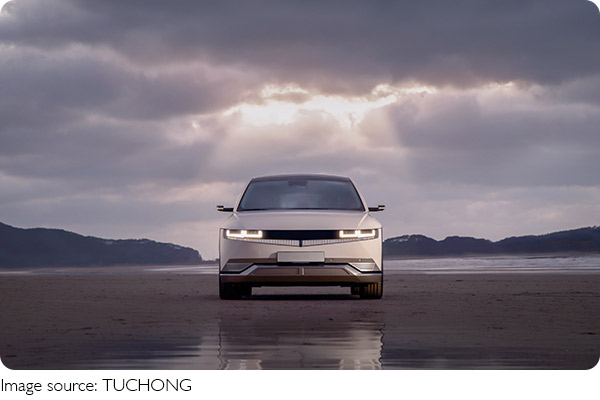
Battery-electric vehicle registrations increased by 16% year-on-year in January. That growth pushed BEVs to around 20% of all new passenger car registrations in Europe, compared with approximately 17% a year earlier. Their share has also roughly doubled compared with three years ago, underlining how quickly fully electric cars have moved into the mainstream.
The broader passenger car market moved in the opposite direction. Total registrations fell by around 4% year-on-year to approximately 800,000 units. This makes the EV performance particularly notable: electric vehicles expanded their share not because the entire market was booming, but while overall demand was declining.
Plug-In Hybrids Grow Faster
The fastest growth came from plug-in hybrid vehicles. Registrations increased by around 33% compared with January 2025, giving PHEVs roughly 10% of the overall passenger car market.
It was their strongest January growth since 2021. When battery-electric, plug-in hybrid and conventional hybrid vehicles are combined, electrified cars represented approximately 69% of all new passenger cars sold in Europe during January.
A year earlier, the figure stood at about 59%. That ten-percentage-point increase shows how rapidly combustion-only models are losing their dominant position.
Renault Leads a Close Model Race
Competition between individual electric models was extremely tight. The Renault 5 and Alpine A290 finished January in first place with 8,165 registrations. The Škoda Elroq followed with 8,103 units, while the BYD Seal U, including both electric and plug-in hybrid versions, reached 8,063 registrations. The difference between the top three models was little more than 100 vehicles.
Tesla Model Y ranked fourth with 6,941 registrations, while the BMW X1 and iX1 combination completed the top five with 6,678 units. The rankings also showed the strength of Volkswagen Group. Models including the Škoda Enyaq, Volkswagen ID.3, ID.7 and ID.4 occupied several leading positions, with seven vehicles from the group appearing within the top 13.
More Affordable Models Enter the Market
The January ranking also reflected a broader choice of electric vehicles. The Citroën e-C3 entered the top 20, supported by growing availability of lower-priced electric cars. The refreshed Toyota bZ4X returned to the ranking, while the Renault Scenic also moved into the top 20.
This wider selection is important because the European EV market is gradually moving beyond a relatively small group of premium or early-adopter models. More manufacturers are now competing across different price levels, vehicle sizes and powertrain formats.
Chinese Brands Gain Ground
Chinese manufacturers continued to strengthen their position in Europe.
BYD delivered one of the most significant performances, moving into the top three electric vehicle brands behind Volkswagen and BMW. The Jaecoo 7 plug-in hybrid also came close to entering the top 20 models, showing that competition from newer manufacturers is spreading beyond fully electric vehicles.
At brand level, Volkswagen led the European EV market with a 9.7% share. BMW followed with 7.3%, while BYD reached 6.8%. Audi and Mercedes-Benz held 6.4% and 6.2% respectively.
Volkswagen Group Holds the Lead
At manufacturer-group level, Volkswagen Group remained clearly ahead, controlling around 26% of the European EV market.
Its advantage comes from a broad portfolio spread across Volkswagen, Škoda, Audi and other brands. Stellantis followed with roughly 10%, while BMW Group held around 9%. Hyundai-Kia accounted for approximately 8%, and BYD Group reached around 7%.
What Comes Next
The January results suggest that a 20% battery-electric market share could become an important benchmark for 2026. If the current pace continues, BEVs could move closer to 25% of new passenger car registrations by the end of the year. Further growth will depend on charging infrastructure, the availability of more affordable models and regulatory support for alternative fuels infrastructure.
The opening month of 2026 shows that Europe’s electric transition is becoming broader and more competitive. BEVs are gaining share, plug-in hybrids are accelerating, and both established and newer manufacturers are fighting for a rapidly changing market.