Pediatric Eye Exam Guide

Amit Sharma
| 01-09-2026
 · Science Team
A pediatric eye exam evaluates a child’s vision and eye health. It can assess visual acuity, focusing, eye alignment, eye movement, coordination, and the condition of the eyes.
Identifying problems early can help address conditions that may affect visual development, learning, or everyday activities.
When Should a Child Have an Eye Exam?
Vision assessment begins during infancy and continues throughout childhood. Screening helps identify children who may need further evaluation, while a comprehensive eye examination provides a more detailed assessment.
A comprehensive examination may be recommended after an abnormal screening result, when symptoms are present, or when a child has risk factors for eye conditions. These may include certain medical or developmental conditions, a family history of childhood eye disease, or noticeable abnormalities of the eyes.
The appropriate timing depends on the child's age, health history, risk factors, and previous findings.
What Happens During a Pediatric Eye Exam?
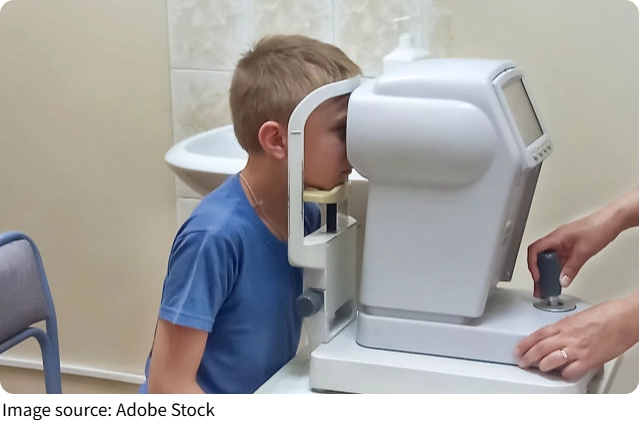
The examination is adapted to the child's age and ability to participate. Depending on the child's needs, the clinician may assess:
- Visual acuity
- Eye alignment and movement
- Focusing ability
- Eye coordination
- Pupil responses
- Refractive error
- Binocular vision
- Depth perception
- Near vision
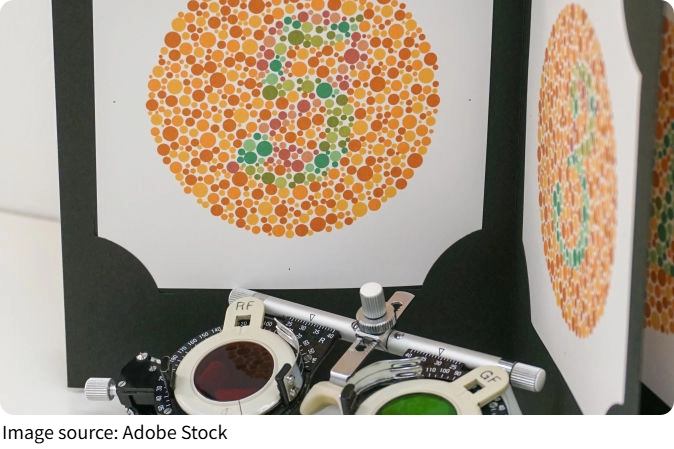
- Color vision when appropriate
- The retina, optic nerve, and other internal eye structures
Children who cannot identify letters can be assessed with pictures, symbols, matching activities, or other age-appropriate methods.
Dilating eye drops may be used when appropriate. They enlarge the pupils, while cycloplegic drops can temporarily relax focusing. This helps the clinician measure refractive error more accurately and examine internal eye structures.
Common Vision Problems in Children
Several conditions can affect children's vision.
Myopia: Nearsightedness causes distant objects to appear blurred, while nearby objects are generally easier to see.
Hyperopia: Farsightedness can make close-up vision more difficult. Some degree of hyperopia is common during early childhood.
Astigmatism: This refractive error occurs when the eye does not focus light evenly, which can cause blurred or distorted vision.
Strabismus: This condition occurs when the eyes are not properly aligned. An eye may turn inward, outward, upward, or downward.
Amblyopia: Often called "lazy eye," amblyopia is reduced vision associated with abnormal visual development during childhood. It can affect one or both eyes and should be addressed promptly when identified.
Signs of a Possible Vision Problem
Young children may not realize that their vision is different or may have difficulty describing symptoms. Parents should watch for persistent behaviors such as:
- Frequent squinting
- Sitting unusually close to books or screens
- Holding reading material very close
- Frequent eye rubbing
- Tilting or turning the head while looking at objects
- Covering one eye
- Difficulty seeing distant objects
- Headaches during visually demanding activities
- Difficulty with visually demanding schoolwork
- An eye that repeatedly turns or wanders
- Unusual sensitivity to light
- Noticeable differences in eye appearance or movement
These signs can have various causes and do not by themselves establish a diagnosis.
Glasses and Other Treatments
Treatment depends on the specific condition and the child's individual needs.
Corrective lenses: Glasses may correct myopia, hyperopia, astigmatism, or other refractive errors.
Amblyopia treatment: Management may include corrective lenses, patching the stronger eye, or other approaches intended to improve vision.
Strabismus treatment: Depending on the type and cause, management may involve corrective lenses, treatment of associated amblyopia, selected medical approaches, or surgery.
Vision therapy: Structured therapy may be considered for certain diagnosed problems involving binocular vision, eye coordination, or specific visual functions. It should follow an appropriate clinical assessment.
Follow-up appointments may be necessary to monitor the child's response to treatment.
“Early detection and treatment are key to protecting your child's vision.” — Centers for Disease Control and Prevention.
How Often Should Children Have Eye Exams?
The frequency of eye examinations varies according to age, health history, risk factors, symptoms, previous findings, and diagnosed conditions.
Children with an identified eye disorder may need periodic follow-up, while those without known problems should continue age-appropriate vision screening and routine healthcare assessments.
When Does an Eye Problem Need Urgent Attention?
Prompt medical assessment is appropriate for certain symptoms, including:
- Sudden loss or significant reduction of vision
- Severe eye pain
- Serious eye injury
- Sudden double vision
- Significant swelling around the eye
- A sudden change in pupil appearance
- Severe redness with pain or vision changes
- Chemical exposure involving the eye
Serious injuries and chemical exposures require prompt medical attention.
Supporting Healthy Vision at Home
Parents can support children's eye health through practical daily habits.
Encourage outdoor activity and regular breaks during prolonged close-up work. Comfortable lighting can make reading and other visually demanding activities easier.
Children should wear prescribed glasses as directed and attend recommended follow-up appointments. Protective eyewear may be appropriate during activities that present a risk of eye injury.
A pediatric eye exam provides a comprehensive assessment of a child's vision and eye health. It can identify refractive errors, alignment problems, amblyopia, and other conditions that may require treatment or monitoring.
Parents who notice persistent changes in visual behavior, eye movement, eye alignment, or vision should discuss them with a qualified healthcare professional.